1930s Makeup Trends? Expert Insights Here!
1930s Makeup Trends: Expert Insights Here!
The 1930s was a transformative decade for beauty culture, marking a shift from the flapper aesthetic of the previous era toward a more refined, glamorous look. As the Great Depression swept across America, women found solace in affordable beauty products and makeup techniques that could instantly elevate their appearance. This golden age of Hollywood heavily influenced everyday makeup trends, with silver screen starlets like Greta Garbo, Marlene Dietrich, and Joan Crawford setting the standard for beauty aspirations across the nation.
What makes 1930s makeup so fascinating is how it reflected both the economic hardships and the escapism of the time. Women became incredibly resourceful with their beauty routines, learning tricks to maximize their makeup collections and create multiple looks from limited products. The decade saw innovations in cosmetic formulations, the rise of iconic makeup brands, and the establishment of beauty standards that would echo through subsequent generations. Whether you’re a makeup artist, beauty historian, or simply curious about vintage aesthetics, understanding 1930s makeup trends offers valuable insights into how culture, economics, and fashion intersect.
The Hollywood Influence on 1930s Beauty
Hollywood’s golden age was in full swing during the 1930s, and the film industry became the primary driver of beauty trends worldwide. Movie studios employed makeup artists who developed signature looks for their contract stars, and these aesthetics filtered down to everyday women who desperately wanted to emulate their favorite actresses. The studio system was incredibly powerful—studios controlled every aspect of their stars’ images, including their makeup looks, which were carefully crafted to photograph beautifully under the harsh lighting of early cinema.
The transition from silent films to talkies meant that close-up shots became even more important, requiring makeup to be more precisely applied and artfully designed. Makeup artists working in Hollywood during this period became celebrities in their own right, with their techniques featured in beauty magazines and their products becoming highly sought after. Stars like Greta Garbo popularized the dramatic, mysterious look with heavy eye makeup and perfectly sculpted eyebrows, while Marlene Dietrich introduced androgynous beauty ideals that challenged conventional femininity. These influences meant that women across America were eager to learn and recreate these looks at home.
The connection between fashion and beauty was also crucial during this period. As you explore sustainable fashion brands and their evolution, you’ll notice that vintage aesthetics continue to inspire modern design. Similarly, 1930s makeup remains a touchstone for contemporary beauty artists looking to create polished, sophisticated looks. The decade established that makeup wasn’t merely about covering blemishes—it was about creating an entire persona and expressing one’s aspirations through beauty.
Signature Eyebrow Styles and Techniques
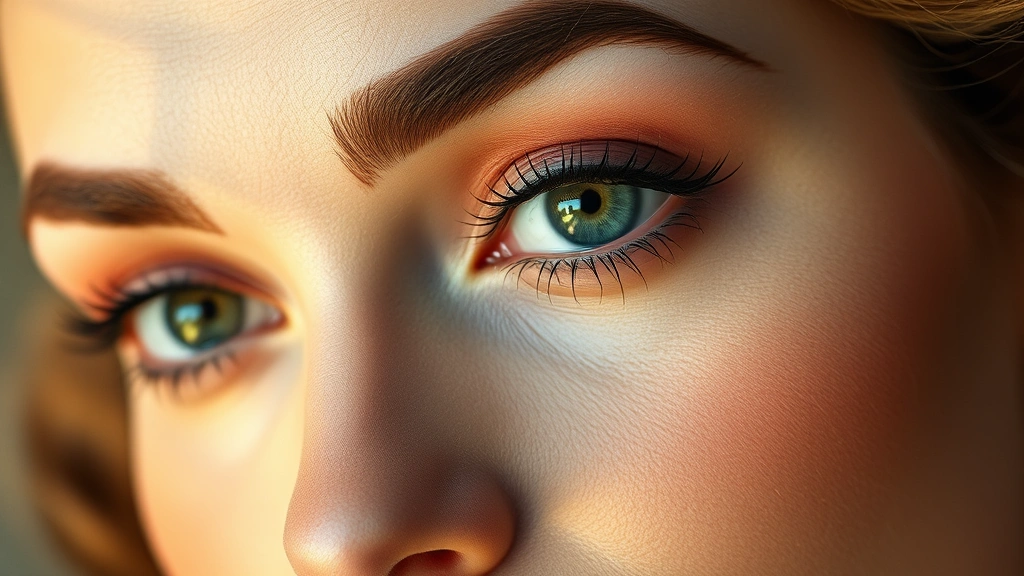
Perhaps no feature defines 1930s makeup quite like the eyebrows. The decade saw a dramatic departure from the thin, over-plucked brows of the 1920s flapper era. Instead, 1930s eyebrows were fuller, more sculpted, and dramatically arched—creating a sophisticated, mature appearance that complemented the era’s overall aesthetic. The ideal brow had a distinct shape: slightly thicker through the inner portion of the brow, tapering gradually to a fine point at the tail, with a pronounced arch positioned roughly two-thirds of the way across the brow.
Women of the 1930s invested considerable time in eyebrow grooming, using tweezers to remove stray hairs beneath and above the natural brow line to achieve the desired shape. The arch was emphasized to create a lifted, alert expression that was considered highly desirable. Eyebrow pencils became essential tools, typically made from hard, waxy formulations that allowed for precise application. Popular colors included black, dark brown, and auburn, chosen to complement both hair color and overall coloring. Many women would use eyebrow pencil to create definition and fill in any sparse areas, ensuring their brows appeared perfectly symmetrical and deliberately shaped.
The application technique was meticulous. Women would apply short, hair-like strokes following the natural direction of brow growth, creating a filled-in but natural-looking result. The emphasis was on creating an expression of sophistication and control—brows that appeared effortlessly perfect but were actually the result of careful maintenance. This approach to eyebrow design was revolutionary for the time and established principles that beauty professionals still use today when creating vintage-inspired looks.
Eye Makeup: Kohl, Shadows, and Dramatic Lids
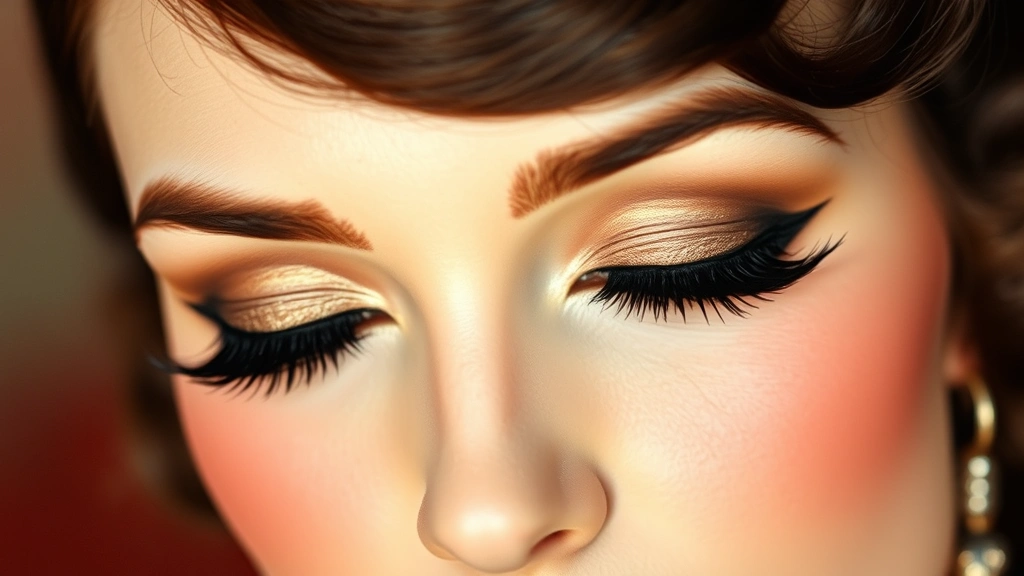
The eyes were undoubtedly the focal point of 1930s makeup, and the techniques used to emphasize them were bold and deliberate. Kohl eyeliner was the foundation of the look, applied to the upper lash line and often extended slightly beyond the outer corner of the eye to create an elongated effect. The kohl was typically black or very dark brown, and it was applied with precision to create a sharp, defined line. Some women would also apply kohl to the inner rim of the lower lash line, making the eyes appear larger and more prominent.
Eye shadow during this period was more subtle than the kohl liner, typically in neutral tones like champagne, pale gold, or soft brown. The shadow was applied to the eyelid using fingertips or small brushes, and the technique involved blending the color smoothly across the lid to create a polished finish. The goal was to add dimension to the eye without creating obvious color blocks—the makeup should appear seamless and sophisticated. Some women would use slightly darker shadow in the crease to add definition and depth, a technique that remains fundamental to eye makeup application today.
False lashes became increasingly popular during the 1930s as mascara technology improved. Women would apply individual lashes or strips of false lashes to the upper lash line, creating the appearance of thick, luxurious lashes that photographed beautifully. The combination of kohl liner, shadowed lids, and dramatic lashes created an intensely glamorous eye that was instantly recognizable as distinctly 1930s. This emphasis on eye makeup reflected the period’s fascination with expression and emotion—the eyes were considered the windows to the soul, and they were treated as the most important feature to enhance.
Lip Color Trends and Application Methods
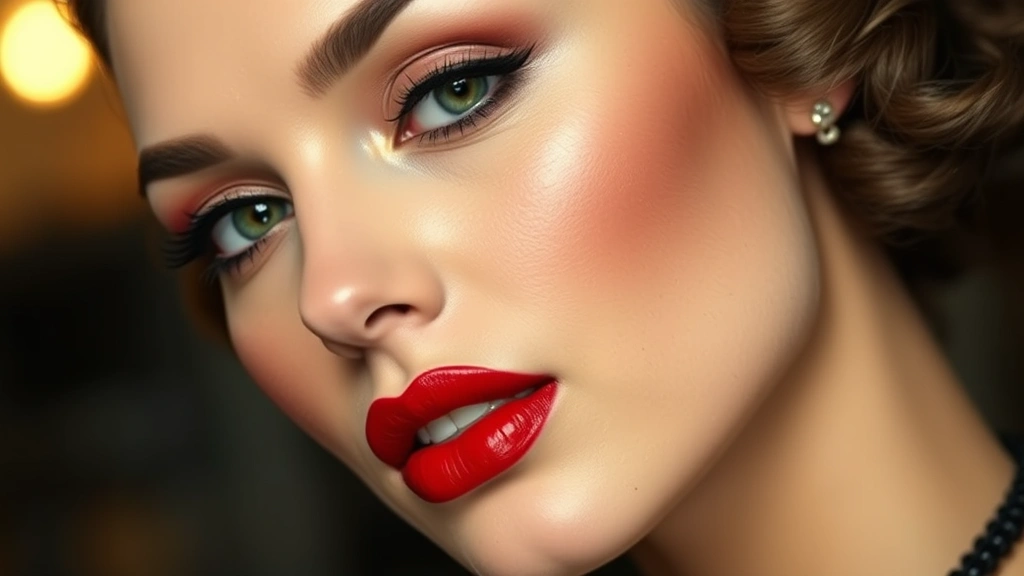
Lip color in the 1930s was bold, saturated, and carefully applied. The most popular shades ranged from deep reds to burgundies and brick tones, reflecting the decade’s preference for warmth and richness. Bright red lipstick remained a staple, but it was applied with precision and intention. The ideal lip shape was full and well-defined, with a slightly cupid’s bow at the center of the upper lip. Women would use lip liners—typically in a matching or slightly darker shade—to outline the lips before applying color, ensuring a clean, precise finish.
The application technique was crucial for achieving the perfect 1930s lip. Women would use a lip brush to apply color carefully, starting at the center of the upper lip and working outward toward the corners. The lower lip was filled in with color, and a lip brush allowed for clean edges and even coverage. Many women would blot their lips with tissue and reapply color for a longer-lasting finish, a technique that was especially important before modern long-wear formulations existed. The emphasis was on creating a defined, polished lip that was both glamorous and tasteful—too much color application could appear garish, while too little would seem unfinished.
Lip gloss as we know it today didn’t exist in the 1930s, but women would use various products to add shine to their lipstick, including oils and waxes. The finish was typically matte or slightly satin, with a subtle sheen that enhanced the color without making it appear wet or overly glossy. Lip color was one of the most important elements of the overall makeup look, as it drew attention to the mouth and contributed significantly to the overall impression of sophistication and glamour.
Foundation and Complexion Perfection
Foundation technology in the 1930s was quite different from what we have today. Most women used powder foundations or heavy cream foundations that required skillful application to avoid looking cakey or unnatural. The goal was to create a smooth, even complexion with a matte finish that would photograph well under bright lights. Women would typically apply foundation using fingertips or a soft sponge, working in thin layers to build coverage without sacrificing a natural appearance.
The ideal complexion of the era was porcelain-like and luminous, with a slight peachy or warm undertone. Rouges and blushes were used to add color to the cheeks, as foundation alone would create an overly pale appearance. Powder was essential to setting the foundation and controlling shine, particularly on the T-zone. Many women would use translucent or slightly tinted powders to set their base, ensuring their makeup would last throughout the day and photograph beautifully.
Skin care was considered foundational to makeup application, and women of the 1930s invested in moisturizers, cleansers, and treatments to ensure their skin was in optimal condition before applying makeup. This philosophy—that skincare is essential to beautiful makeup—remains true today. The focus on achieving a flawless base meant that women spent considerable time preparing their skin, using cold creams, toners, and serums to create a smooth canvas for makeup application.
Cheek Color and Contouring Techniques
Blush application in the 1930s was an art form, with careful attention paid to placement and blending. The most popular blush colors were warm tones—coral, peach, rose, and brick—applied to the apples of the cheeks and blended upward toward the temples. The technique involved using a soft brush to apply color in a circular motion, ensuring the blush appeared natural and well-integrated into the complexion. The goal was to create a flush of color that appeared as though it were coming from within, rather than sitting on top of the skin.
Contouring as we understand it today wasn’t explicitly practiced in the 1930s, but women used shading techniques to enhance their facial structure. A slightly darker powder or cream product might be applied to the hollows of the cheeks to add definition, or to the sides of the nose to create the appearance of a narrower nose. These techniques were subtle and refined, designed to enhance natural features rather than dramatically reshape the face. The emphasis was on looking naturally beautiful rather than obviously made up, even though the makeup was actually quite involved.
The placement of blush was also strategic in creating the overall facial proportions desired in the era. By applying blush higher on the cheekbones and blending it upward, women could create the appearance of higher, more prominent cheekbones—a feature considered highly desirable. The warmth of the blush also helped to balance the intensity of the eye makeup, creating harmony across the face. This balanced approach to makeup—where no single feature overwhelmed the others—was a hallmark of sophisticated 1930s beauty.
Essential Products and Brands of the Era
The 1930s saw the emergence of several iconic beauty brands that remain relevant today. Max Factor was the dominant force in makeup, particularly among Hollywood professionals. Their products were specifically formulated to work well under studio lighting and to photograph beautifully. Max Factor’s pancake foundation and their range of lip and cheek colors became industry standards. The brand’s influence was so significant that many women aspired to use the same products their favorite movie stars used.
Revlon also rose to prominence during this period, introducing innovative lip and nail products that appealed to women seeking affordable luxury. Their lipsticks came in striking colors and were packaged in beautiful tubes that made them desirable products to own and display. Other brands like Pond’s, Elizabeth Arden, and Coty also offered quality makeup products that were accessible to middle-class women, making the glamorous 1930s look achievable for those who couldn’t afford high-end professional makeup.
For those interested in learning about beauty and lifestyle trends, understanding the historical context of these brands reveals how marketing and celebrity endorsement shaped consumer behavior. The products themselves often weren’t dramatically different from competitors, but brand prestige and association with Hollywood glamour made them highly desirable. This phenomenon—where the story and image surrounding a product matter as much as the product itself—became a foundational principle of modern beauty marketing.
Creating an Authentic 1930s Makeup Look
To recreate an authentic 1930s makeup look, start with a well-prepared, moisturized base. Apply a primer to help your makeup last, then use a foundation that matches your skin tone and apply it evenly with a brush or sponge. Set the foundation with a translucent powder, paying special attention to the T-zone to control shine. The foundation should look natural and seamless—not cakey or overly matte.
Next, focus on the eyebrows. Using an eyebrow pencil, create a defined arch about two-thirds of the way across the brow. Fill in any sparse areas with short, hair-like strokes, ensuring the inner portion of the brow is fuller and gradually tapers to a fine point. The overall shape should appear sculpted and intentional.
For the eyes, apply a light, neutral eyeshadow across the entire lid, blending it smoothly. Use a slightly darker shade in the crease for definition. Apply black or dark brown kohl eyeliner to the upper lash line, extending it slightly beyond the outer corner. Consider applying individual false lashes or a strip of false lashes to create dramatic lashes. Finish with mascara on the lower lashes if desired.
Apply a warm-toned blush to the apples of your cheeks, blending upward toward the temples. Use a lip liner to outline your lips, then apply a bold, warm red or burgundy lipstick using a lip brush. Blot and reapply for longer-lasting color. The entire look should appear polished, sophisticated, and intentionally glamorous.
For those exploring how vintage aesthetics influence modern style, you might also consider exploring sustainable approaches to beauty consumption, which can help you build a vintage-inspired makeup collection thoughtfully. Additionally, understanding how to make conscious lifestyle choices extends beyond fashion and beauty into all aspects of living well.
FAQ
What was the most iconic 1930s makeup look?
The most iconic 1930s makeup look featured dramatically arched eyebrows, bold kohl-lined eyes with neutral eyeshadow, false lashes, and a deep red lipstick applied with precision. This look, popularized by Hollywood stars, emphasized the eyes as the focal point while maintaining a polished, sophisticated overall appearance.
How did women apply makeup without modern tools in the 1930s?
Women of the 1930s used brushes, sponges, and their fingertips to apply makeup. They relied on precision and practice to achieve even application. Many women would use lip brushes for lipstick application and small brushes for eyeshadow and blush. The emphasis was on skill and technique rather than specialized tools.
Were there different makeup looks for different occasions in the 1930s?
Yes, women adjusted their makeup intensity based on the occasion. Daytime makeup was typically more subtle, with lighter eyeshadow and less dramatic eye liner. Evening makeup was more dramatic, with heavier kohl, false lashes, and bolder lip color. Professional and formal events called for more conservative makeup application than social gatherings or nights out.
Can I recreate 1930s makeup with modern products?
Absolutely. Modern makeup products work wonderfully for creating 1930s-inspired looks. The techniques and principles remain the same—the main difference is that contemporary products offer better formulations, longer wear, and easier application. You can achieve an authentic 1930s aesthetic using modern makeup with the proper techniques and color selection.
What eyebrow shape was most flattering in the 1930s?
The ideal 1930s eyebrow was fuller through the inner portion, with a pronounced arch positioned about two-thirds of the way across the brow, tapering to a fine point at the tail. This shape created a lifted, alert expression and was considered highly flattering and sophisticated. The key was ensuring both brows were symmetrical and precisely groomed.
How did 1930s makeup differ from 1920s flapper makeup?
The 1920s featured thin, over-plucked eyebrows and a more youthful, androgynous aesthetic. The 1930s introduced fuller, more sculpted brows and a more mature, glamorous look. Eye makeup became more dramatic and sophisticated, and lipstick application became more precise. The overall shift reflected changing beauty ideals and the influence of Hollywood glamour.

Related Posts

Perfect Old Fashioned Donut: Baker’s Secrets
Old Fashioned Chocolate Pie Recipe? Chef’s Favorite