Edwardian Makeup Trends? Expert Insights
Step back in time with us as we explore the captivating world of Edwardian makeup trends that defined an entire era of beauty and elegance. The Edwardian period, spanning from 1901 to 1910, represented a fascinating transition in cosmetic history where makeup evolved from Victorian restraint to more expressive and intentional beauty practices. This was the age of the “Gibson Girl,” an idealized feminine beauty standard that influenced makeup application techniques across the globe.
Understanding Edwardian beauty practices offers modern makeup enthusiasts valuable insights into how historical context shapes aesthetic preferences. The makeup trends of this period weren’t merely about looking beautiful—they reflected social status, modernity, and changing attitudes toward femininity. Women of the Edwardian era embraced cosmetics more openly than their Victorian predecessors, marking a significant cultural shift in how society viewed makeup and personal grooming.
Whether you’re a history buff, a makeup artist researching period-accurate looks, or simply curious about how beauty standards have evolved, this comprehensive guide will walk you through the essential elements of Edwardian makeup trends, techniques, and the cultural significance behind each beauty choice.
The Historical Context of Edwardian Beauty
The Edwardian era marked a pivotal moment in cosmetic history. Unlike the Victorian period, when makeup was often associated with actresses and women of questionable morality, the Edwardian age saw respectable society women embracing cosmetics with newfound confidence. This shift reflected broader social changes, including women’s increasing independence and participation in public life.
During this time, the beauty industry experienced explosive growth. New cosmetic companies emerged, and existing ones expanded their product lines dramatically. Women had access to a wider variety of makeup products than ever before, though quality and safety standards were far from what we know today. The availability of these products, combined with changing social attitudes, created the perfect environment for edwardian fashion and beauty to flourish together.
The Edwardian period coincided with the rise of department stores and mail-order catalogs, making cosmetics more accessible to middle-class women. This democratization of beauty meant that makeup trends could spread more rapidly across different social classes and geographic regions. The era also saw increased interest in beauty advice columns, which became hugely popular in newspapers and magazines.
Signature Edwardian Makeup Features
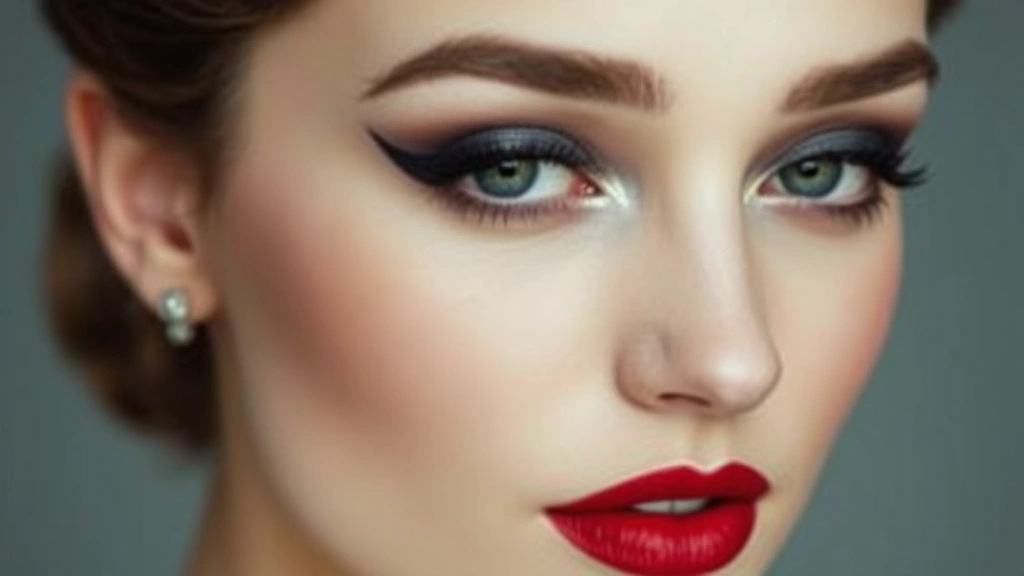
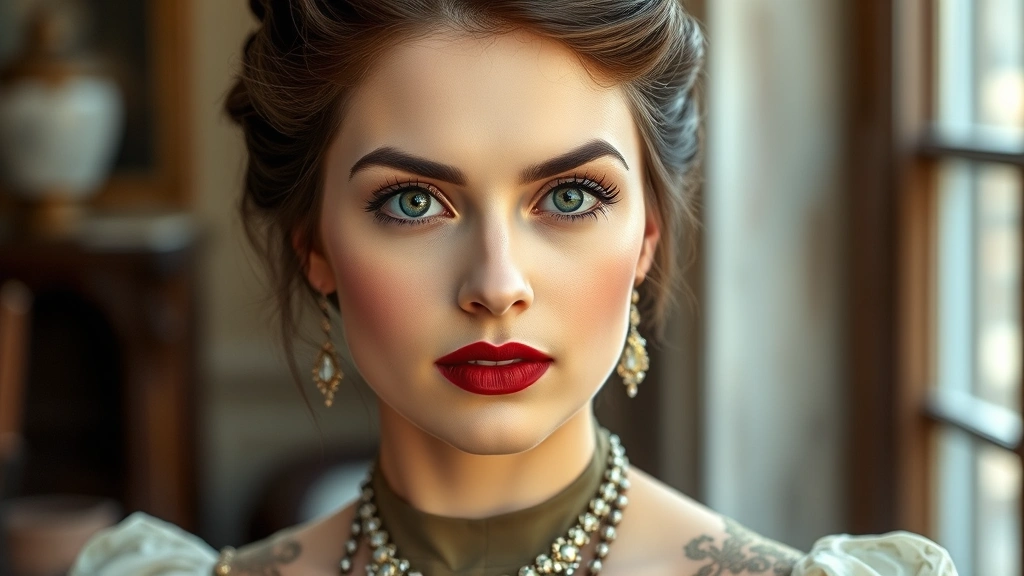
Edwardian makeup had distinct characteristics that set it apart from both Victorian and later Edwardian-influenced styles. The most recognizable feature was the emphasis on a pale, porcelain complexion combined with dramatic eye makeup and carefully defined lips. This combination created a striking, almost theatrical appearance that was considered the height of elegance.
The eyebrows were another crucial element of Edwardian beauty. Rather than the thick, natural brows we see today, Edwardian women favored thin, highly arched eyebrows that were often plucked or shaved into a delicate line. This dramatic arch emphasized the eyes and contributed to the overall look of refined sophistication. Many women used eyebrow pencils or pomades to define and darken their brows.
Cheek color was applied but with restraint. Rather than the bold blush we might apply today, Edwardian women used subtle rose or peachy tones to create a gentle flush. The blush was typically concentrated on the apples of the cheeks and blended carefully to avoid looking obvious or garish. This natural-looking flush was meant to suggest youth and vitality without appearing artificial.
The overall aesthetic was one of refined femininity. While makeup was definitely worn and visible, it was supposed to appear as though the wearer had been blessed with naturally perfect features. This created an interesting paradox: women spent considerable time and effort on their makeup to achieve a look that appeared effortless and natural.
The Gibson Girl Influence
No discussion of Edwardian makeup trends is complete without addressing the Gibson Girl, the iconic illustration created by artist Charles Dana Gibson. The Gibson Girl represented the idealized American woman of the Edwardian era and had an enormous influence on beauty standards and makeup practices. Her image appeared in magazines, advertisements, and popular culture, shaping how women understood and pursued beauty.
The Gibson Girl had several defining features that influenced makeup application: large, almond-shaped eyes with well-defined lids, a small, pouty mouth, a delicate nose, and a graceful neck. Women aspired to recreate these features through makeup techniques and styling choices. The Gibson Girl’s makeup look featured dramatic eye definition, carefully sculpted eyebrows, and a small, perfectly formed mouth.
This illustration had such cultural power that it influenced not just makeup but also fashion, hairstyles, and overall beauty ideals. Women purchased beauty products specifically designed to help them achieve the Gibson Girl look. Makeup companies created advertisements featuring Gibson Girl imagery, and beauty advice columns frequently referenced her as the standard of beauty.
The Gibson Girl represented a modern, independent woman who was fashionable, educated, and confident. Unlike earlier beauty ideals that emphasized passivity and delicacy, the Gibson Girl was active and engaged with the world. Her makeup look reflected this modernity—it was more defined and intentional than previous styles, signaling that this was a woman who took control of her appearance and, by extension, her life.
Edwardian Eyeshadow and Eye Makeup
Eye makeup was perhaps the most dramatic aspect of Edwardian beauty. The eyes were meant to be the focal point of the face, and considerable effort went into making them appear larger, more expressive, and more striking. This was achieved through a combination of eyeshadow, eyeliner, and eyebrow techniques.
Eyeshadow colors in the Edwardian period tended toward cool, muted tones. Popular shades included soft blues, grays, purples, and greens. These colors were chosen specifically to make the whites of the eyes appear brighter and more luminous. Some women used subtle gold or bronze tones, but these were less common than the cooler shades. The eyeshadow was applied primarily to the eyelid and sometimes extended slightly into the brow bone.
The application technique was quite different from modern methods. Rather than blending multiple shades seamlessly, Edwardian women often applied eyeshadow in distinct zones. The lid itself might be one color, while the brow bone received a lighter shade. This created definition and depth without the softly blended appearance we typically aim for today.
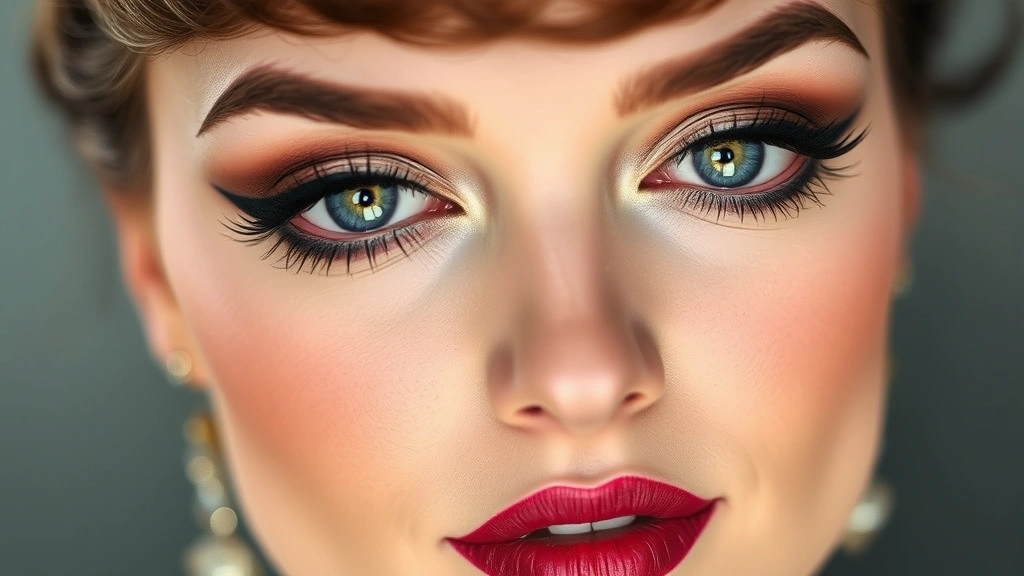
Eyeliner was essential to the Edwardian eye makeup look. A dark line was drawn along the upper lash line, and often along the lower lash line as well. The line was typically thick and clearly visible, not subtle or smudged. This created a strong definition that made the eyes appear larger and more prominent. Some women extended the line slightly beyond the outer corner of the eye, creating a subtle cat-eye effect.
Mascara, as we know it today, didn’t exist during the Edwardian era. Instead, women used preparations called “eye black” or darkened their lashes with various homemade and commercial preparations. Some women simply curled their lashes and left them natural, while others applied dark pomades or dyes to make them appear darker and more defined. False lashes also existed during this period, though they were less common and more difficult to apply than modern versions.
Lip Color and Lip Care Practices
Edwardian lips were small, well-defined, and deeply colored. The ideal mouth was a perfect “Cupid’s bow” shape with full lips that appeared almost pouty. Achieving this look required both careful application of lip color and sometimes strategic use of lip liner to redefine the natural lip shape. Women often applied lip color in a way that made their lips appear smaller and more defined than their natural shape.
Lip color choices were bold by the standards of the era. Deep reds, burgundies, and wine tones were popular, along with some berry and mauve shades. The lip color was meant to be noticeable and was one of the most visible aspects of Edwardian makeup. Unlike the subtle, natural-looking lips that became fashionable in later decades, Edwardian lips were intentionally dramatic and clearly colored.
Lip products during the Edwardian period were primarily cream-based or stick formulations. Many were homemade or purchased from apothecaries, while others came from emerging cosmetic companies. Some lip products contained problematic ingredients by modern standards, including lead and other heavy metals. Despite these safety concerns, women applied these products liberally to achieve the desired look.
Lip care was considered important, and women used various preparations to keep their lips soft and smooth. Lip balms made from beeswax, oils, and other natural ingredients were common. Some women used lanolin or other emollients to prevent chapping. The focus on lip care reflected the understanding that lips needed to be in good condition to display lip color effectively.
Skin Preparation and Complexion
Achieving the pale, porcelain complexion that defined Edwardian beauty required significant preparation and maintenance. This was perhaps even more important than the colored makeup applied on top, as the skin tone provided the canvas for everything else. Women went to great lengths to maintain a pale complexion, viewing tanned or sunburned skin as undesirable and unfashionable.
Foundation products existed during the Edwardian era, though they were quite different from modern formulations. Many women used powder-based foundations or face paints that provided significant coverage. These products were often quite heavy and could look somewhat mask-like if not applied carefully. Despite their thickness, they were considered essential for achieving an even skin tone.
Face powder was applied generously over the foundation to set the makeup and provide additional coverage. Powder came in various shades, from pure white to slightly tinted options. Many women preferred the whitest powders available, as this contributed to the pale, porcelain appearance that was so highly valued. The powder was often applied with large powder puffs and brushes, creating a somewhat heavy appearance by modern standards.
Beyond makeup, women used various skincare preparations to maintain their complexion. These included creams, oils, and lotions designed to keep the skin smooth and supple. Many of these products were homemade or purchased from apothecaries, and their effectiveness varied widely. Some women used more questionable preparations, including those containing mercury or other toxic substances, in hopes of achieving clearer, brighter skin.
Sun protection was an important concern for Edwardian women seeking to maintain their pale complexion. While sunscreen as we know it didn’t exist, women used parasols, hats, gloves, and long sleeves to protect their skin from sun exposure. Some women also used specialized preparations designed to prevent tanning or to lighten existing sun damage.
Recreating Edwardian Makeup Today
If you’re interested in recreating an authentic Edwardian makeup look for costume, theatrical purposes, or simply historical interest, several key steps will help you achieve the desired result. Start with a discussion about beauty history and cultural practices to better understand the context of these beauty choices.
Begin with skin preparation. Apply a primer or moisturizer to create a smooth base. Then apply foundation that matches your skin tone or is slightly lighter, as Edwardian women often used foundation that was paler than their natural skin tone. Set this with a translucent or slightly tinted powder, applying it generously for an authentic period appearance.
Next, focus on the eyebrows. Pluck or define them into a thin, highly arched shape. Use an eyebrow pencil or pomade to darken and define the brows. The arch should be quite pronounced, and the overall effect should be one of delicate refinement. Avoid thick, natural-looking brows, as these would not be period-accurate.
For the eyes, apply eyeshadow in cool, muted tones. Blues, grays, and purples work well. Apply the color primarily to the eyelid, with a lighter shade on the brow bone. Then apply a dark eyeliner along the upper lash line, extending it slightly beyond the outer corner if desired. You can also apply eyeliner to the lower lash line for additional definition.
Apply a subtle blush in rose or peachy tones to the apples of your cheeks. Blend it carefully so it appears natural and not too obvious. Finally, apply a bold lip color in deep red, burgundy, or wine tones. Use a lip liner to define the lips and create a perfect Cupid’s bow shape if desired.
Products and Ingredients Used
Understanding the products and ingredients used during the Edwardian era provides valuable context for understanding the makeup trends of the time. Many products we use today didn’t exist, while some ingredients that were common then are now recognized as dangerous.
Foundations and face paints often contained lead, bismuth, or other heavy metals. While these ingredients were effective at providing coverage and creating a pale appearance, they posed serious health risks. Some women experienced poisoning or other health problems from prolonged use of these products, though the connection wasn’t always recognized at the time.
Eyeshadows were typically made from crushed minerals and pigments, sometimes mixed with oils or waxes to create a cream or paste consistency. Popular pigments included lapis lazuli for blue shades, iron oxides for reds and browns, and various other minerals. Some eyeshadows also contained bismuth or other metallic compounds.
Lip colors were often made from carmine (a red dye derived from cochineal insects) mixed with oils, waxes, and other ingredients. Some lip products contained lead or other metals. Home-made lip colors were common and were often made by mixing various plant-based dyes with oils and beeswax.
Mascara and eye black preparations varied widely. Some were made from soot mixed with oils or waxes, while others used plant-based dyes or other pigments. These preparations could be quite harsh on the delicate eye area, and infections or irritations were not uncommon.
Modern recreations of Edwardian makeup use contemporary, safer products that aim to achieve the same visual effect as historical formulations. This allows us to appreciate the beauty of Edwardian makeup without exposing ourselves to the health risks that women of the era faced. For more information about historical cosmetic ingredients and their safety, consult beauty and dermatology resources.
FAQ
What was the most important aspect of Edwardian makeup?
The eyes were considered the most important feature. Dramatic eye makeup with defined eyeshadow, eyeliner, and sculpted eyebrows was central to the Edwardian look. The goal was to make the eyes appear large, expressive, and striking.
How did Edwardian makeup differ from Victorian makeup?
Victorian makeup was more subtle and restrained, often limited to a slight blush and pale complexion. Edwardian makeup was bolder and more intentional, with dramatic eye makeup and clearly visible lip color. Edwardian women were also more open about wearing makeup publicly.
Were there different makeup looks for different occasions?
Yes. Daytime makeup was typically more subtle than evening makeup. For evening events, women applied more dramatic eye makeup and darker lip colors. However, even daytime Edwardian makeup included eyeshadow, eyeliner, and lip color by modern standards.
What eyebrow shape was considered ideal during the Edwardian era?
Thin, highly arched eyebrows were the ideal. The arch was quite pronounced, and the overall effect was delicate and refined. Many women plucked or shaved their eyebrows to achieve this shape.
How can I achieve an authentic Edwardian makeup look with modern products?
Use a pale foundation, muted eyeshadow colors (blues, grays, purples), dark eyeliner, defined thin eyebrows, subtle blush, and bold lip color. Modern makeup products designed to be historically inspired can help you achieve an authentic appearance safely.
What was the Gibson Girl, and how did it influence Edwardian makeup?
The Gibson Girl was an illustration of the idealized American woman created by Charles Dana Gibson. She had a significant influence on beauty standards and makeup practices of the era, with her large eyes, defined features, and refined appearance inspiring women to recreate her look through makeup and styling.
Were false lashes used during the Edwardian period?
Yes, false lashes existed during the Edwardian era, though they were less common and more difficult to apply than modern versions. Most women focused on darkening and defining their natural lashes rather than using false ones.
What health risks were associated with Edwardian cosmetics?
Many Edwardian cosmetics contained lead, mercury, bismuth, and other toxic substances. Prolonged use of these products could cause poisoning, skin damage, or other health problems. Modern recreations of Edwardian makeup use safer contemporary products instead.
External Resources:
Smithsonian Magazine: The History of Makeup
American Academy of Dermatology
Beauty Tips: History of Makeup Through the Ages
International Society of Cosmetic Scientists
Britannica: History of Fashion

Related Posts
Perfect Old Fashioned Donut: Baker’s Secrets
Old Fashioned Chocolate Pie Recipe? Chef’s Favorite