60s Makeup Trends? Expert Insights
The 1960s revolutionized beauty in ways that still influence makeup artists and beauty enthusiasts today. From bold graphic eyeliner to mod-inspired shadows, this iconic decade gave us some of the most recognizable makeup trends in fashion history. Whether you’re recreating a vintage look for a special event or simply curious about how 60s aesthetics shaped modern beauty, understanding these timeless techniques is essential for any makeup lover.
The 60s weren’t just about one makeup style—they evolved dramatically throughout the decade. Early 60s makeup featured polished, sophisticated looks inspired by Hollywood glamour, while the mid-to-late 60s embraced the bold, experimental spirit of the mod movement and counterculture. This era proved that makeup could be an art form, a statement, and a form of self-expression all at once.
The Evolution of 60s Eye Makeup
The 1960s marked a dramatic shift in makeup philosophy. Early in the decade, beauty standards emphasized a more conservative approach—think perfectly groomed brows and subtle eye makeup. However, as the decade progressed, particularly after the mid-60s, makeup became bolder, more experimental, and deeply connected to youth culture and social movements.
The British invasion significantly influenced American beauty trends. Models like Twiggy became international icons, and their distinctive makeup looks—characterized by exaggerated eyes and graphic lines—became the gold standard for fashionable women everywhere. This wasn’t just makeup; it was a cultural statement that challenged traditional notions of femininity and beauty.
What made 60s makeup so revolutionary was its focus on the eyes. While previous decades had emphasized lips as the focal point, the 60s shifted all attention upward. Large, defined eyes became the canvas for artistic expression, allowing women to experiment with colors, shapes, and techniques in ways that were previously considered too bold or unconventional.
The decade also saw the rise of makeup artistry as a legitimate profession. Professional makeup artists began developing new techniques and products specifically designed to achieve the dramatic looks that defined the era. This professionalization of makeup helped establish many techniques we still use today, making beauty education and resources more accessible to everyone.
Iconic Eyeliner Techniques
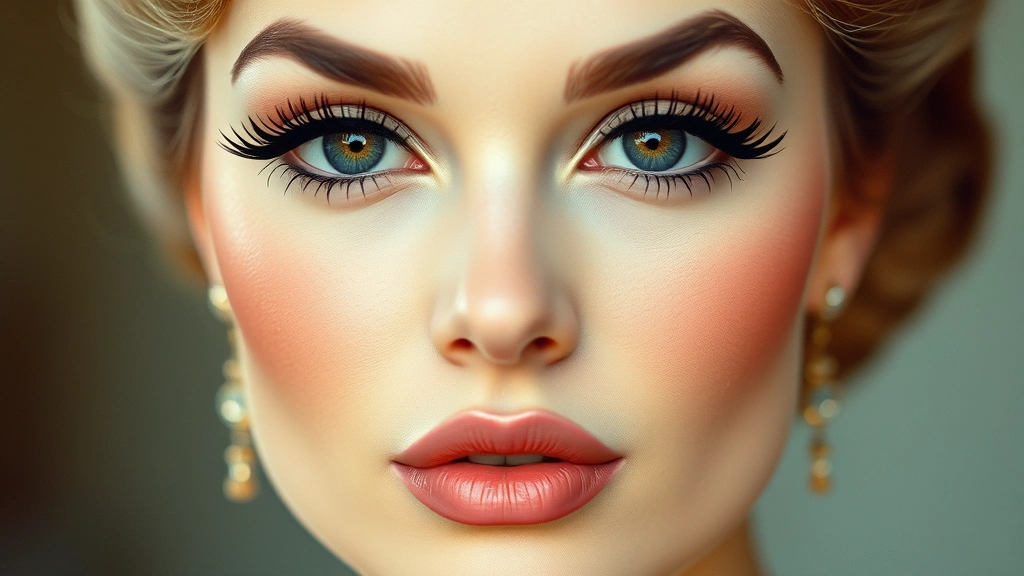
The eyeliner was arguably the most defining element of 60s makeup. The classic winged eyeliner became synonymous with the decade, creating a sharp, graphic line that extended beyond the natural eye shape. This technique required precision, patience, and a steady hand—qualities that separated professional makeup artists from casual beauty enthusiasts.
There were several variations of 60s eyeliner styles:
- The Classic Wing: A sharp, dramatic flick at the outer corner of the eye, creating an elegant feline effect that elongated the face
- The Double Wing: A more daring approach featuring wings on both upper and lower lashes for maximum impact
- The Graphic Line: A thick, bold line that emphasized the entire eye contour without necessarily extending outward
- The Mod Liner: Geometric shapes and asymmetrical lines inspired by pop art and modern design movements
The key to achieving authentic 60s eyeliner was understanding how cultural movements shaped beauty standards. The mod movement, in particular, encouraged bold experimentation with makeup as a form of artistic expression. Young women weren’t just following beauty rules—they were breaking them intentionally.
Product-wise, the 60s relied heavily on liquid eyeliners and kohl pencils. Liquid liners provided the precision needed for those sharp wings, while kohl could be smudged and blended for softer, smokier effects. Many modern makeup artists still prefer these classic formulas for achieving authentic vintage looks.
Eyeshadow Colors and Application
Eyeshadow in the 60s wasn’t just about color—it was about creating dimension and drama. The most iconic shades included:
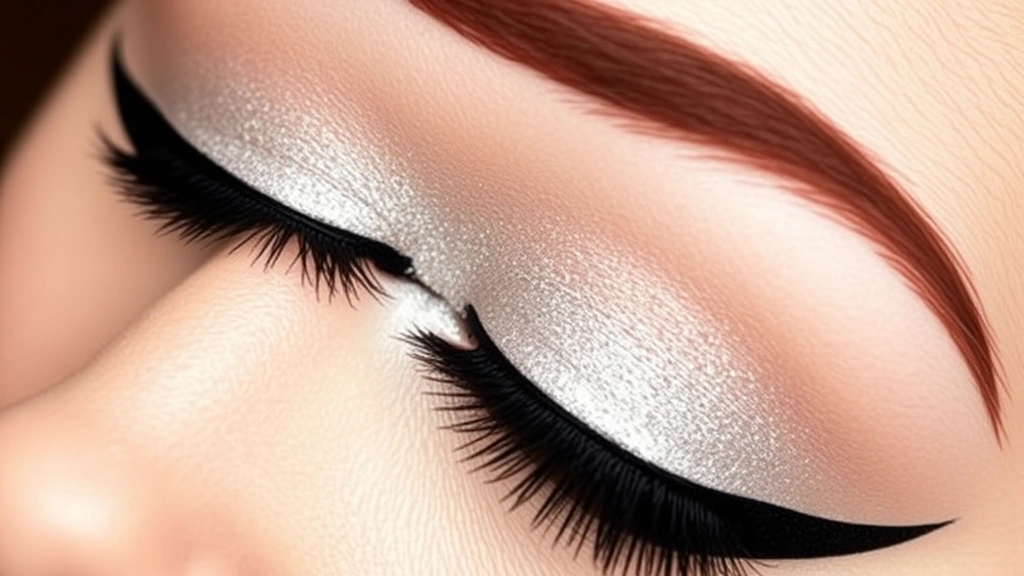
- Metallic Silvers: These shimmery, futuristic-looking shadows became hugely popular, especially in the latter half of the decade. They paired perfectly with graphic eyeliner and created an otherworldly effect
- Bold Blues: From powder blue to electric cobalt, blue eyeshadow became a staple. It was often applied heavily and blended upward toward the brow bone
- Earthy Tones: Browns, taupes, and warm bronzes offered a more sophisticated alternative to the bolder shades
- Jewel Tones: Emeralds, teals, and purples appeared frequently in late-60s makeup looks, often paired with mod fashion
- Nude and Cream: These lighter shades were used strategically to highlight the brow bone and inner corner of the eye, creating contrast with darker liner
Application techniques were crucial for achieving the proper 60s aesthetic. Eyeshadow was typically applied in distinct sections: a lighter shade on the lid, a medium tone in the crease, and sometimes a darker shade along the lash line to enhance the eyeliner. This layering created depth and made the eyes appear larger and more defined.
The use of eyeshadow primers wasn’t common in the 60s, so women relied on foundation or concealer to create a smooth base. Modern makeup artists often use contemporary primers when recreating vintage looks, as they provide better longevity without compromising the authentic appearance of the finished look.
The Perfect 60s Winged Eyeliner
Creating an authentic 60s winged eyeliner is a skill that takes practice to master. Here’s a step-by-step guide based on techniques used by professional makeup artists:
Step 1: Prepare the Eye
Start with a clean, moisturized eyelid. Apply a thin layer of foundation or concealer as a base to help the liner adhere properly and prevent smudging.
Step 2: Map the Wing
Determine where your wing will end by looking straight ahead in the mirror. A good rule of thumb is to extend the line from the outer corner of your eye toward the end of your eyebrow. Some prefer a subtle flick, while others go for dramatic, extended wings—both are authentically 60s.
Step 3: Apply the Liner
Using a liquid eyeliner with a thin brush or a kohl pencil, draw a line along the upper lash line, starting from the inner corner. Keep the line thin initially—you can always make it thicker. As you approach the outer corner, begin angling the line upward to create the wing.
Step 4: Complete the Wing
In one confident stroke, draw from the lash line to your predetermined endpoint. This requires a steady hand and a bit of courage. If you make a mistake, use a cotton swab dipped in makeup remover to clean it up and try again.
Step 5: Balance and Define
If desired, add a thin line to the lower lash line to balance the look. Some 60s styles featured lower liner, while others kept it minimal on the bottom.
For those struggling with precision, professional beauty publications like Allure offer detailed tutorials and tips from experienced makeup artists. Don’t get discouraged if your first attempts aren’t perfect—even professionals practiced for years to achieve this level of precision.
Lips and Complexion
While eyes dominated 60s makeup, lips and complexion played important supporting roles in completing the overall aesthetic. Understanding how these elements worked together is essential for authentic recreation.
Lip Colors and Finishes
The 60s offered diverse lip options depending on the specific look being created:
- Pale Nude: Often paired with bold eye makeup, pale or nude lipsticks allowed the eyes to be the star of the show
- Soft Pink: A classic choice that complemented most skin tones and eye colors
- Coral and Orange: These warm, vibrant shades became increasingly popular as the decade progressed
- Bright Red: For a more classic, polished look, bright red lips remained a timeless choice
- Matte Finish: Most 60s lipsticks featured a matte or satin finish rather than glossy
Complexion and Foundation
The 60s celebrated a flawless, porcelain-like complexion. Foundation was applied evenly across the entire face, with careful attention to blending at the jawline. The goal was an almost mask-like finish that appeared perfectly smooth and uniform.
Powder was essential for setting makeup and reducing shine. Many women used heavy powder application, which contributed to the somewhat flat, matte appearance characteristic of the era. Modern makeup artists often use less powder when recreating vintage looks to avoid an overly dated appearance while maintaining period accuracy.
Blush was subtle and strategically placed to add dimension without looking obvious. Colors ranged from soft pinks to peachy tones, applied in the apples of the cheeks and blended upward toward the temples.
Mascara and Brows
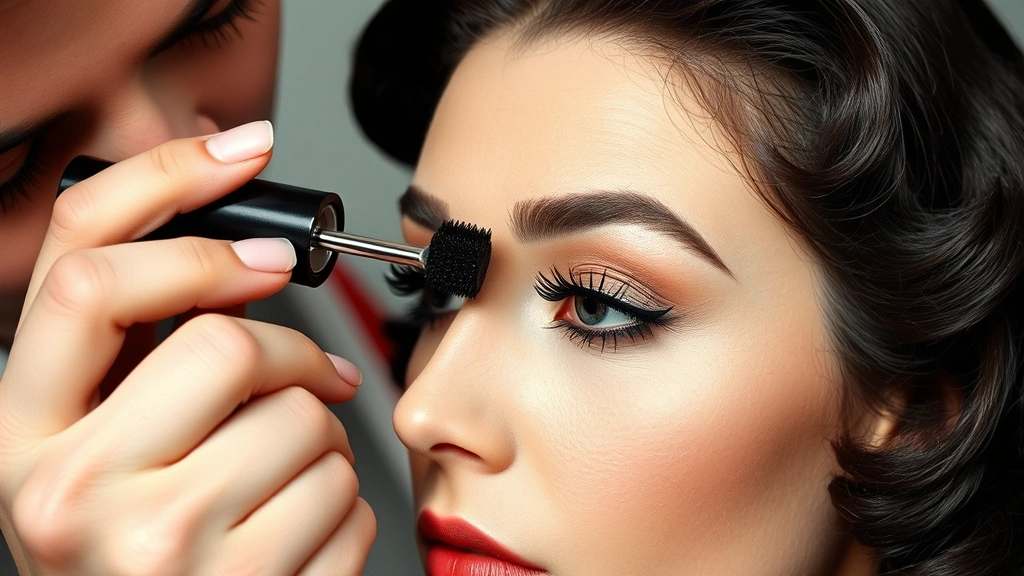
Mascara was absolutely essential to achieving the 60s eye aesthetic. Heavy mascara application created the voluminous, dramatic lashes that made eyes appear larger and more expressive. The goal was to build multiple coats of mascara to create thickness and definition.
Mascara Application Techniques
Professional makeup artists of the era employed several techniques to maximize mascara impact:
- Applying multiple coats, allowing each coat to dry slightly between applications
- Using an eyelash curler before mascara application to lift and open the eyes
- Focusing on the center lashes to create a wide-eyed effect
- Sometimes applying mascara to both upper and lower lashes for maximum drama
- Using black or dark brown mascara to enhance the graphic eyeliner
Eyebrow Styling
Eyebrows in the 60s were typically well-groomed and relatively thin compared to modern standards. The preferred shape was a gentle arch with a slightly higher lift at the inner brow. Brows were kept neat through regular plucking and were often filled in with eyebrow pencil or powder to ensure a polished appearance.
Unlike the bold, thick brows favored in recent years, 60s brows were refined and subtle. They framed the eye without competing for attention with the dramatic eyeliner and eyeshadow. This balance was key to achieving the iconic look of the era.
Creating Your Own 60s Look
Now that you understand the key elements of 60s makeup, let’s discuss how to create your own authentic vintage look. Whether you’re preparing for a themed event, a photoshoot, or simply experimenting with makeup as an art form, these guidelines will help you achieve the perfect 60s aesthetic.
Product Selection
Modern makeup products work beautifully for recreating vintage looks. Choose:
- A liquid eyeliner with a thin, precise brush for crisp wings
- Cream or powder eyeshadow in classic 60s colors (silvers, blues, golds, or earth tones)
- A volumizing mascara in black or dark brown
- Foundation that matches your skin tone perfectly for that flawless base
- Lipstick in a shade that complements your overall look
- Eyebrow pencil or powder for defined brows
Step-by-Step Application
Follow this order for best results:
- Prime your eyelids with concealer or eyeshadow primer
- Apply foundation and concealer to even out skin tone
- Set with powder, using a light hand to avoid an overly matte appearance
- Apply eyeshadow base color to the entire lid
- Add crease color for dimension
- Apply eyeliner, creating your desired wing shape
- Apply mascara in multiple coats
- Groom and fill in eyebrows
- Apply blush to the apples of the cheeks
- Finish with lipstick
Common Mistakes to Avoid
When attempting to recreate 60s makeup, avoid these pitfalls:
- Over-blending eyeshadow: The 60s look often featured distinct color sections rather than seamlessly blended transitions
- Using too much shimmer: While metallic shadows were popular, they should still look refined, not glittery
- Applying liner too thin: The graphic eyeliner was bold and visible—don’t be shy with product
- Neglecting the lower lash line: Depending on your chosen style, the lower lash line deserves attention too
- Forgetting to curl lashes: An eyelash curler is essential for opening up the eyes before mascara application
For more detailed guidance on makeup techniques, dermatology resources provide information on how makeup products interact with skin, which is helpful when recreating vintage looks on sensitive or problematic skin.
The beauty of 60s makeup is its versatility. You can adapt the techniques to suit your personal style, skin tone, and comfort level. The core principles—bold eyes, graphic liner, and a flawless complexion—remain constant, but the execution can be uniquely yours.
Remember that fashion and beauty are interconnected, and the 60s aesthetic extends beyond makeup to clothing, hair, and overall presentation. For a truly immersive vintage experience, consider pairing your 60s makeup with period-appropriate fashion and hairstyles.
FAQ
What was the most popular 60s makeup look?
The winged eyeliner paired with bold eyeshadow and voluminous mascara was the most iconic 60s makeup look. This style became synonymous with mod fashion and the cultural revolution of the era, popularized by models like Twiggy and celebrities who embraced the bold new aesthetic.
Can I recreate 60s makeup with modern products?
Absolutely! Modern makeup products are often superior in quality and longevity compared to products from the 1960s. Contemporary liquid eyeliners, eyeshadow formulas, and mascaras work beautifully for creating authentic vintage looks while providing better performance throughout the day.
What eyeshadow colors were most popular in the 60s?
Metallic silvers, bold blues, earthy browns, and jewel tones were the most popular eyeshadow colors of the 1960s. The specific color choice often depended on personal preference and the particular trend of the moment, with early-60s looks favoring more subdued tones and late-60s looks embracing bolder, more experimental colors.
How do I make my winged eyeliner look authentic?
The key to authentic 60s winged eyeliner is precision and boldness. Use a liquid liner with a thin brush, apply a clear line along the upper lash line, and extend it upward at the outer corner in one confident stroke. The wing should be visible and graphic rather than subtle and blended.
Was mascara always black in the 60s?
While black mascara was most common, dark brown and even colored mascaras were occasionally used. However, black remained the gold standard for creating the dramatic, defined lashes that characterized 60s makeup. Multiple coats were typically applied to achieve maximum volume and definition.
Should I pluck my eyebrows thin for a 60s look?
If you want an authentic 60s appearance, slightly thinner, more refined brows work best. However, modern beauty standards favor fuller brows, so you can adapt the 60s brow shape to work with your current brow thickness. The key is maintaining a gentle arch and keeping brows well-groomed.
What lip color should I wear with bold 60s eye makeup?
Pale nude, soft pink, or coral tones work beautifully with dramatic 60s eye makeup, as they allow the eyes to remain the focal point. However, bold red lips can also work for a more classic, polished 60s look. Choose based on the overall aesthetic you’re trying to achieve.

Related Posts
Perfect Old Fashioned Donut: Baker’s Secrets
Old Fashioned Chocolate Pie Recipe? Chef’s Favorite