1870s Makeup Trends: What Historians Reveal
1870s Makeup Trends: What Historians Reveal
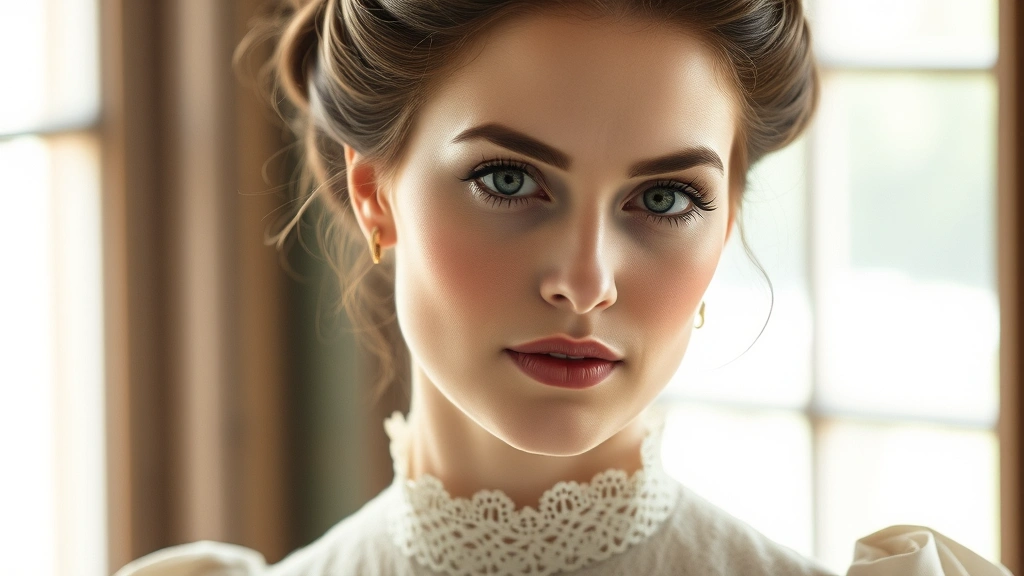
The 1870s represented a fascinating turning point in beauty history, where Victorian ideals collided with evolving social attitudes about cosmetics and self-presentation. During this decade, makeup transitioned from something whispered about in shadowy corners to a more openly discussed aspect of fashion and personal grooming. Historical records, beauty archives, and period photographs reveal that women of the 1870s employed remarkably sophisticated techniques to achieve the era’s coveted aesthetic, despite working with formulations that would seem primitive by modern standards.
What makes 1870s makeup particularly intriguing is how it reflected the decade’s broader cultural shifts. As industrialization accelerated and more women entered public spaces—whether as shopkeepers, governesses, or society matrons—the rules governing beauty became increasingly complex. The makeup trends of this period tell us as much about women’s changing roles as they do about pigments and powders. Historians studying beauty practices alongside human environment interaction have discovered that cosmetic production and trade routes fundamentally shaped commerce and cultural exchange during the Victorian era.
The Complexion Ideal: Pale Perfection
In the 1870s, the pursuit of pale, luminous skin dominated beauty culture across Europe and America. This wasn’t simply an aesthetic preference—it was a complex statement about class, leisure, and femininity. A pale complexion signaled that a woman didn’t work outdoors, that she spent her days in drawing rooms and parlors rather than fields or factories. The ideal skin was described in period beauty guides as having the texture of porcelain and the translucency of alabaster, achieved through meticulous skincare and strategic makeup application.
Women employed white and cream-colored powders as the foundation of their beauty routines. These powders, often made from lead carbonate or bismuth, were applied liberally to create an almost mask-like finish. The danger of these ingredients is now well-documented—lead poisoning was a genuine health risk—but Victorian women, driven by beauty standards and lacking modern safety knowledge, accepted these risks as the cost of fashionable appearance. The powder served multiple purposes: it created the desired pale tone, absorbed facial oils, and provided a smooth canvas for additional makeup.
Beneath the powder, women often used rouge, though application required careful restraint. Unlike the dramatic cheek color of later decades, 1870s rouge was meant to suggest a natural flush rather than declare obvious makeup use. The goal was to appear healthy and youthful without appearing painted or theatrical—unless, of course, you were actually a theatrical performer, in which case far bolder makeup was not only acceptable but expected. This distinction between acceptable and excessive makeup created interesting social hierarchies in how women could present themselves.
Eye Makeup and Dramatic Definition
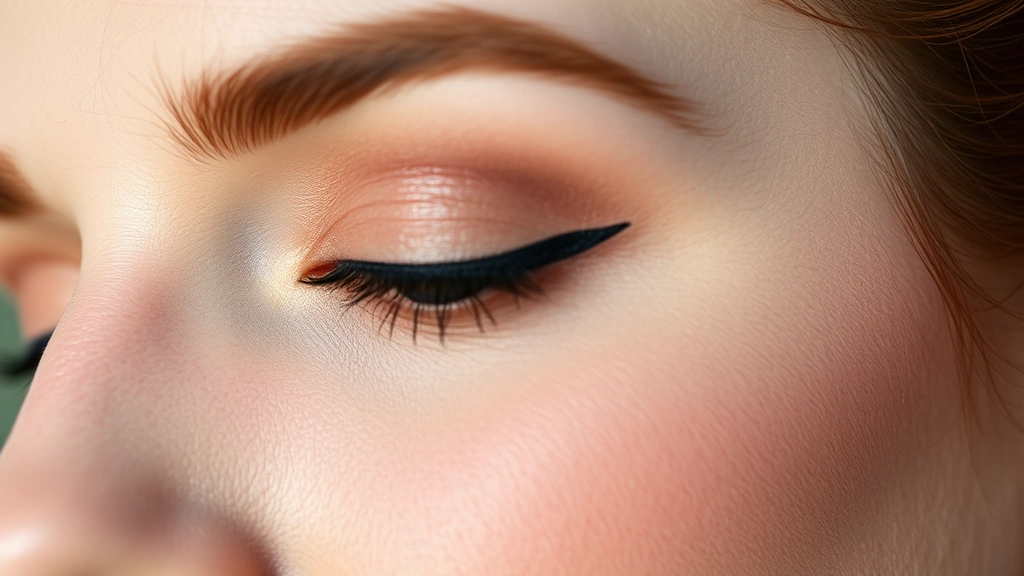
The eyes received considerable attention in 1870s makeup artistry, with techniques designed to make them appear larger and more luminous. Period beauty manuals and beauty journalism of the era reveal that women used kohl and dark pencils to line the eyes, creating definition that made the eye appear to extend further across the face. Upper lash lines received particular emphasis, often with a thick, deliberate line that would be considered quite dramatic for everyday wear in some circles.
Eyeshadow in the 1870s was subtle compared to later periods, but not absent. Women used muted earth tones, soft greens, and pale blues applied to the lid to create dimension and depth. These shadows were often applied with fingertips or small brushes, blended to create a soft, natural-looking gradient. The under-eye area might be highlighted with a touch of lighter powder to create the illusion of larger eyes. Mascara as we know it didn’t exist yet, so women relied on darkening their lashes with preparations made from soot, oils, and other ingredients, or simply used their eye makeup to make lashes appear darker through contrast.
The eyebrow was another crucial element of 1870s eye makeup. Rather than the thin, highly arched brows that would become fashionable in the 1920s, the 1870s preferred fuller, more natural brows that still conveyed feminine delicacy. These brows were often darkened slightly with pencil or powder, maintaining their natural shape while adding definition to the eye area. Understanding how brows framed the face during this period helps us appreciate how environment and society intersected with beauty standards—different regions and social circles had distinct preferences.
Lip Color: Subtle Stains and Bold Statements
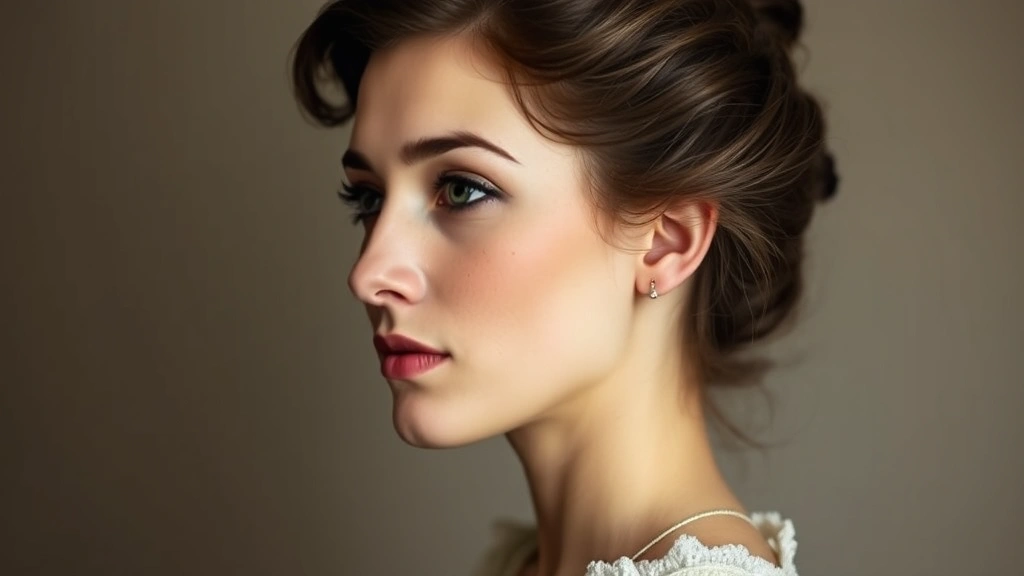
Lip color in the 1870s occupied an interesting position in the beauty hierarchy. For respectable women in polite society, obvious lip color was often considered inappropriate or even scandalous. However, this didn’t mean lips went unadorned. Instead, women employed subtle techniques to enhance their lips while maintaining plausible deniability about wearing makeup. Lip stains made from natural ingredients like beetroot, cochineal insects, and plant extracts provided color that appeared to come from within rather than from applied cosmetics.
The most fashionable lip color of the decade was a natural rose or coral tone—what beauty historians call the “bee-stung” lip. This look was achieved through a combination of staining, subtle shading with darker tones on the outer edges, and careful attention to lip shape. Women used lip pencils to define and slightly reshape their lips, making them appear fuller and more perfectly formed. The upper lip was often emphasized more than the lower, creating a particular silhouette that complemented the decade’s fashion.
Theatrical performers and women of questionable reputation, by contrast, wore much bolder lip color. Deep crimsons, rich reds, and dramatic burgundies were associated with actresses and women working in entertainment. This stark difference in lip color acceptability based on social standing reveals how makeup functioned as a social signifier. A woman’s choice of lip color literally announced her social position and respectability. This aspect of 1870s beauty culture demonstrates how closely fashion and personal choices affect broader society in ways both visible and invisible.
Brows and Beauty Marks
Beyond their role in framing the eyes, eyebrows held significant importance in 1870s aesthetics. The ideal brow was full, slightly arched, and maintained a natural appearance that actually required considerable effort to achieve. Women plucked stray hairs to create a neat line, but excessive plucking was avoided—the goal was enhancement, not dramatic reshaping. Brow color was typically slightly darker than hair color, creating definition without appearing artificial.
Beauty marks, or mouches, enjoyed particular popularity during the 1870s, though they were somewhat less fashionable than they had been in previous centuries. These small decorative marks were applied using black or dark brown powder or pencil, often placed at strategic points on the face—near the corner of the mouth, on the cheekbone, or near the temple. They served both aesthetic and practical purposes: they drew attention to features a woman wanted to emphasize while also providing a convenient distraction from any facial imperfections she wished to downplay. The application of beauty marks was considered an art form, requiring precision and understanding of facial proportion.
Product Formulations and Ingredients
Understanding 1870s makeup requires examining the actual products women used. Lead-based white powders dominated the market, despite increasing awareness of their dangers. Bismuth was sometimes used as a safer alternative, though it was more expensive and less effective at creating the desired finish. Rouge was typically made from carmine (derived from insects) mixed with talc or other bases. Kohl for eye lining came from various sources—some imported from the Middle East, some produced domestically from soot and oils.
According to historical beauty research from the Smithsonian Institution, many 1870s cosmetics were produced by small manufacturers without standardized safety testing. Women often made their own cosmetics at home, following recipes from beauty guides and magazines. These homemade preparations offered more control over ingredients but also greater risk of contamination or improper formulation. The decade saw increasing commercialization of beauty products, with companies beginning to mass-produce cosmetics for wider distribution.
The sourcing of ingredients reveals the international network of trade that connected different types of environments and economies. Carmine came from Mexican cochineal insects, kohl from Middle Eastern sources, and various oils and plant extracts came from colonial territories. The beauty industry was genuinely global, even in the 1870s, with supply chains connecting distant regions through the demand for cosmetic ingredients.
Application Techniques of the Era
The actual process of applying 1870s makeup was time-consuming and required significant skill. Women typically began with a thorough skincare routine, cleansing the face and applying oils or creams to prepare the skin. Once the base was ready, the white powder was applied using puffs or brushes, often in layers to build the desired opacity and pale finish. This required a light hand—too much powder created an obvious mask-like appearance, while too little failed to achieve the fashionable pallor.
After powdering, rouge was applied to the apples of the cheeks, blended carefully to create a natural-looking flush. The application technique was crucial—harsh lines or obvious patches of color were considered marks of poor taste. Professional makeup artists of the era developed sophisticated blending techniques, using their fingers or soft materials to create seamless transitions. Eye makeup came next, with kohl carefully applied to the upper lash line, sometimes extended slightly at the outer corner for emphasis.
Eyeshadow, when used, was applied with minimal tools—often just fingertips—and blended extensively. The goal was subtle enhancement rather than dramatic color. Lip color application required particular care, with women using small brushes or applicators to ensure neat edges. The entire process could take thirty minutes to an hour, making makeup application a significant daily ritual. Unlike modern makeup, which often aims for a natural appearance created through careful technique, 1870s makeup acknowledged its own artificiality while still maintaining standards of good taste and appropriateness.
Social Class and Makeup Access
Access to quality cosmetics was directly tied to social class in the 1870s. Wealthy women could purchase imported products from Paris and London, employ professional makeup artists, and experiment with various formulations. Middle-class women had access to commercially produced cosmetics but often made their own preparations to save money. Working-class women had the most limited access to cosmetics, though some basic products like simple powders were affordable even for those with limited means.
The type of makeup a woman wore, and how skillfully it was applied, communicated her social standing to observers. A perfectly applied, subtle makeup look required leisure time to perfect the technique and money to purchase quality products—both markers of social superiority in Victorian society. Conversely, obvious makeup or poorly applied cosmetics could suggest lower social standing or professional status as an entertainer. This made makeup choices genuinely consequential for women’s social positioning.
Professional makeup artists existed primarily to serve wealthy clients or theatrical performers. These artists possessed specialized knowledge about color theory, skin tones, and facial proportion that wasn’t widely available. The democratization of makeup knowledge and access was still in its infancy during the 1870s, with beauty advice primarily available through expensive magazines and beauty guides that only wealthy women could afford.
The Transition Away from Restraint
By the late 1870s, attitudes toward makeup were beginning to shift. The rigid Victorian ideal of invisible makeup—the goal of looking naturally beautiful while actually wearing significant cosmetics—was gradually being challenged. Younger women, influenced by new movements in fashion and expanding opportunities for public life, began experimenting with bolder makeup looks. This transition would accelerate dramatically in the 1880s and 1890s, but its seeds were clearly visible in the late 1870s.
Women’s increasing participation in sports, education, and public life created new contexts where traditional makeup rules didn’t apply. A woman bicycling required different makeup considerations than a woman attending an evening party. The rise of the New Woman figure—educated, active, and less constrained by traditional femininity—challenged the notion that makeup should be invisible and deniable. This cultural shift, documented in period newspapers and beauty magazines, set the stage for the more expressive makeup trends that would follow.
The 1870s thus represent a pivotal moment in beauty history. Women were still largely operating within Victorian constraints regarding makeup acceptability, yet clearly pushing against those boundaries. The decade’s makeup trends reflect this tension between tradition and innovation, between maintaining respectability and expressing individuality through beauty choices.
FAQ
What was the most dangerous ingredient in 1870s makeup?
Lead carbonate in white powders was the most hazardous ingredient. It accumulated in the body over time, causing serious health problems including lead poisoning, neurological damage, and reproductive issues. Many women experienced chronic health problems directly attributable to their cosmetics use.
Did all women wear makeup in the 1870s?
No, makeup use was stratified by class and social position. Respectable upper and middle-class women wore subtle makeup that appeared natural, while working-class women had less access to cosmetics. Women in theatrical or entertainment professions wore much bolder makeup.
How did 1870s makeup compare to 1860s makeup?
The 1870s saw slightly bolder eye makeup and more acceptance of subtle color compared to the 1860s. However, the fundamental principle of invisible makeup remained dominant throughout both decades.
Were there any alternatives to lead-based powders?
Yes, bismuth and rice powder offered safer alternatives, though they were more expensive and sometimes less effective. Some women also used powdered chalk or other mineral bases, though these had their own drawbacks.
How did makeup trends vary by region?
French and British makeup trends were considered most fashionable and influenced American beauty practices. However, regional variations existed, with some areas maintaining more conservative approaches while others experimented more freely with color and definition.
What tools did women use to apply makeup?
Women primarily used their fingers, small brushes, puffs, and specialized applicators. Professional makeup artists had more sophisticated tools, but most women worked with simple implements that required skill and practice to use effectively.

Related Posts

Perfect Old Fashioned Donut: Baker’s Secrets
Old Fashioned Chocolate Pie Recipe? Chef’s Favorite